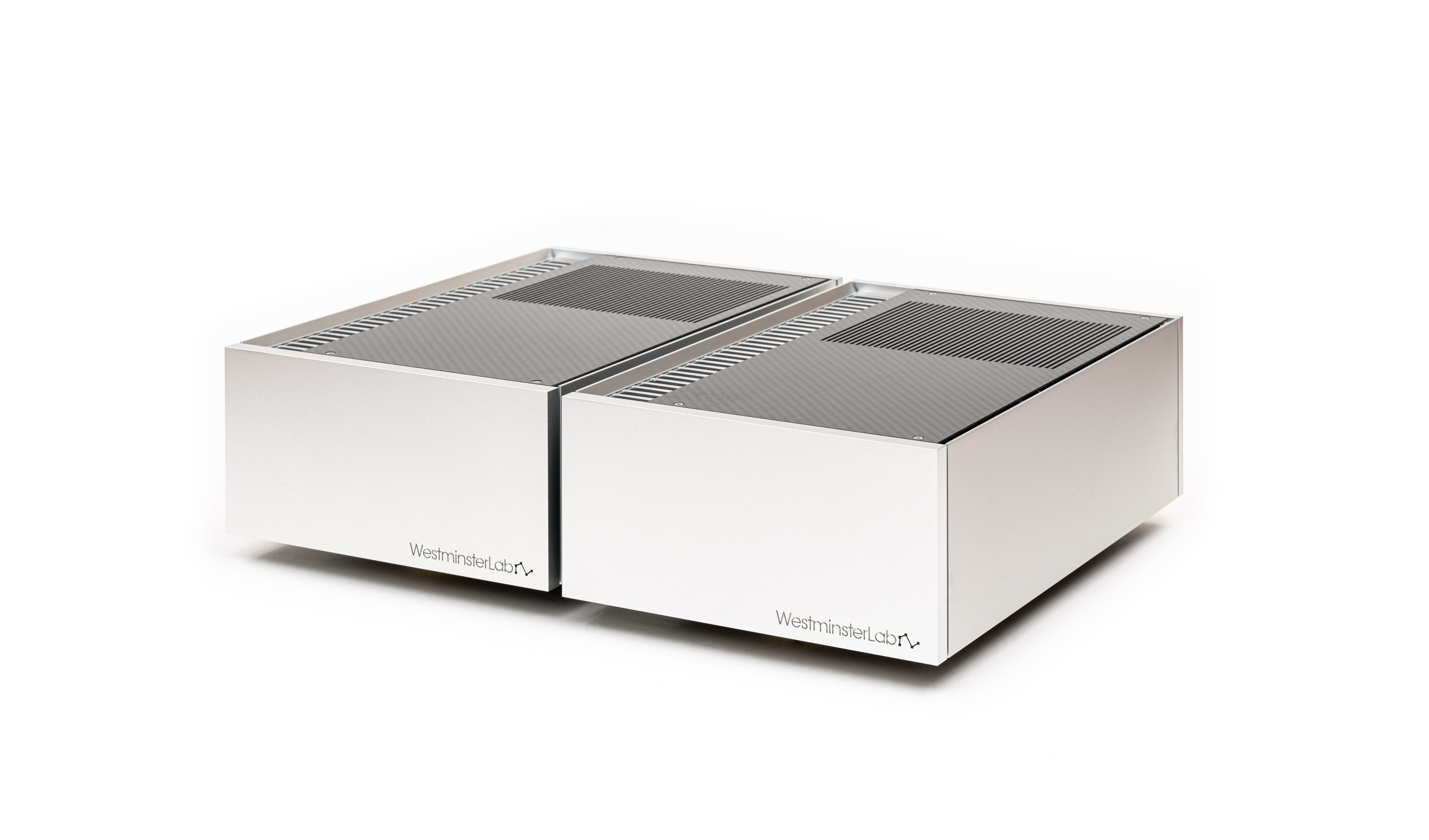
Class A Power Amplifier
Class A evolution of the UNUM line.
Rei continues the discontinued UNUM in Class A form. Up to 400 watts, compact chassis, designed for low distortion and stable bias under real load.
Purebred WestminsterLab
After UNUM — Class A, continued.
UNUM is discontinued. Rei is its Class A successor: the same design priorities, updated for listeners who want that character in a current chassis.
The face stays familiar. The architecture is rebuilt for Class A power delivery and measured performance. Every design choice is checked against one criterion — does the music stay accurate and clean?
Development combines exhaustive computer simulation with real-world performance assessment and auditions, using multiple methods so no single metric hides blind spots.
No Ordinary Class A
Warmth without the long wait.
Proprietary iBIAS and CCS systems optimise bias in real time — responding to loading, amplifier status, and the operating temperature of the output devices.
Rei cuts warm-up time significantly, then holds bias at the optimal working point across conditions. You get Class A behaviour without a long idle period.
Transistor Matching
Matching with discipline.
Output transistors are paired within 1% tolerance across multiple working points, then verified under sustained stress. That matching is how hundreds of watts of Class A stay stable in a compact chassis — first-principle pairing, not a single datasheet figure.
Ease in the listening room usually comes from parts that track each other under load.
Curve Proof
Matched not once — but along the curve.
The match is not declared at a single point.
Rei pairs output transistors across the curve where they actually operate — then holds that match through the same range the amplifier must deliver under load and heat.
Less deviation between output transistors means less distortion and less wasted heat — and a more linear operating condition when the amplifier delivers power.
0
Amplification path
Beginningto end.
The amplification path has nine components — from input to output. Fewer stages mean fewer variables between source and speaker.
Power, Power and Power
Fast response under load.
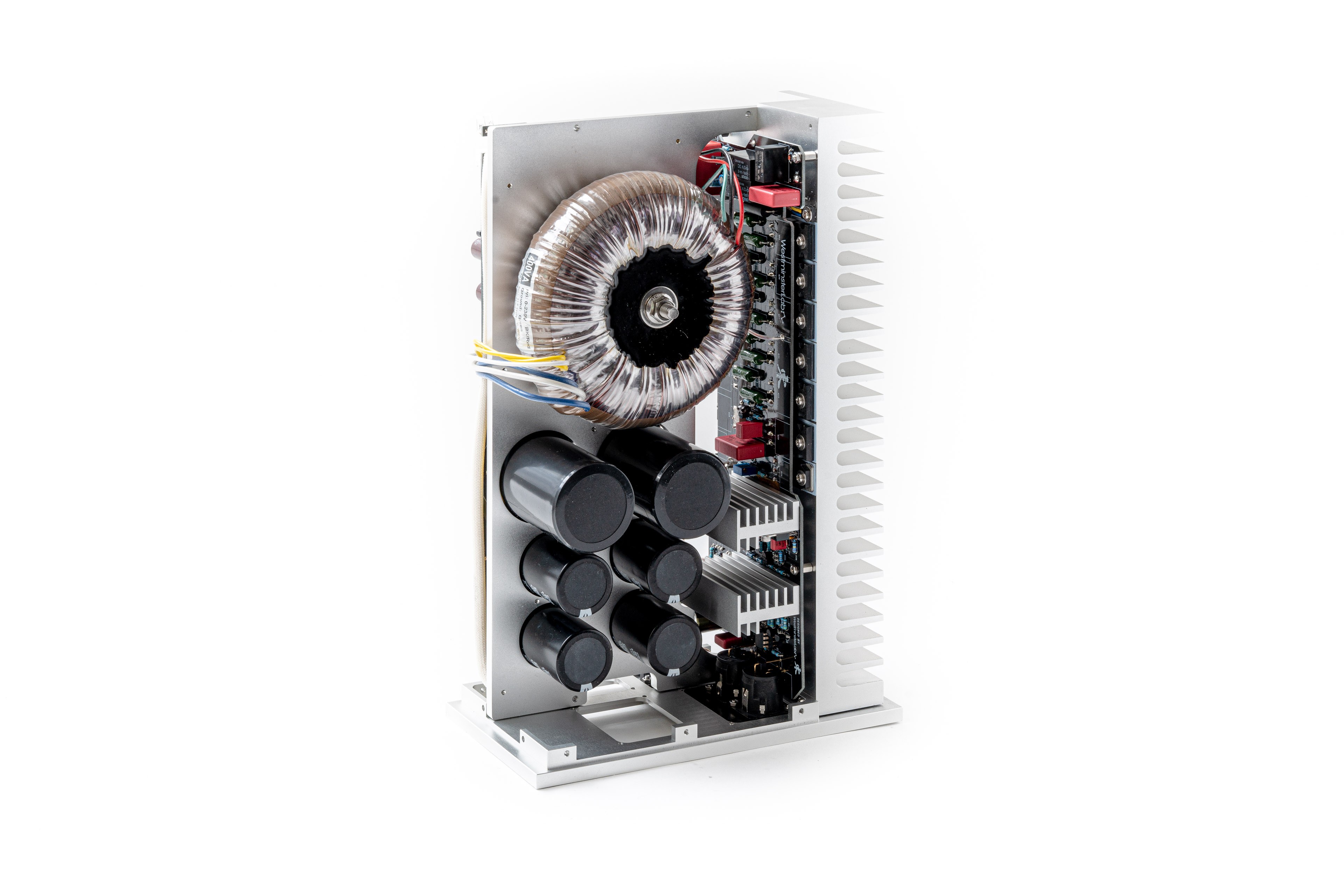
A capable supply must stay quiet, hold regulation, and respond instantly when demand rises. Rei’s power architecture is tuned for that — clean current on demand, without sluggish recovery.
The O-type transformer is smaller and more efficient than typical toroidal designs, delivering cleaner, faster power while leaving room in the chassis for stacking.
For systems that run multiple power amplifiers, Rei includes a designed bypass so you can daisy-chain additional units even when the preamplifier provides only one output.
Ultra-thick, low-capacitance, high-density PCB construction — developed with aerospace-grade suppliers — supports speed and strong power delivery in its category. The amplifier stays out of the way so the recording stays clear.
Purity by Layout
Distilled circuits. Perpendicular layout.
Rei’s development is as much about what we remove as what we keep.
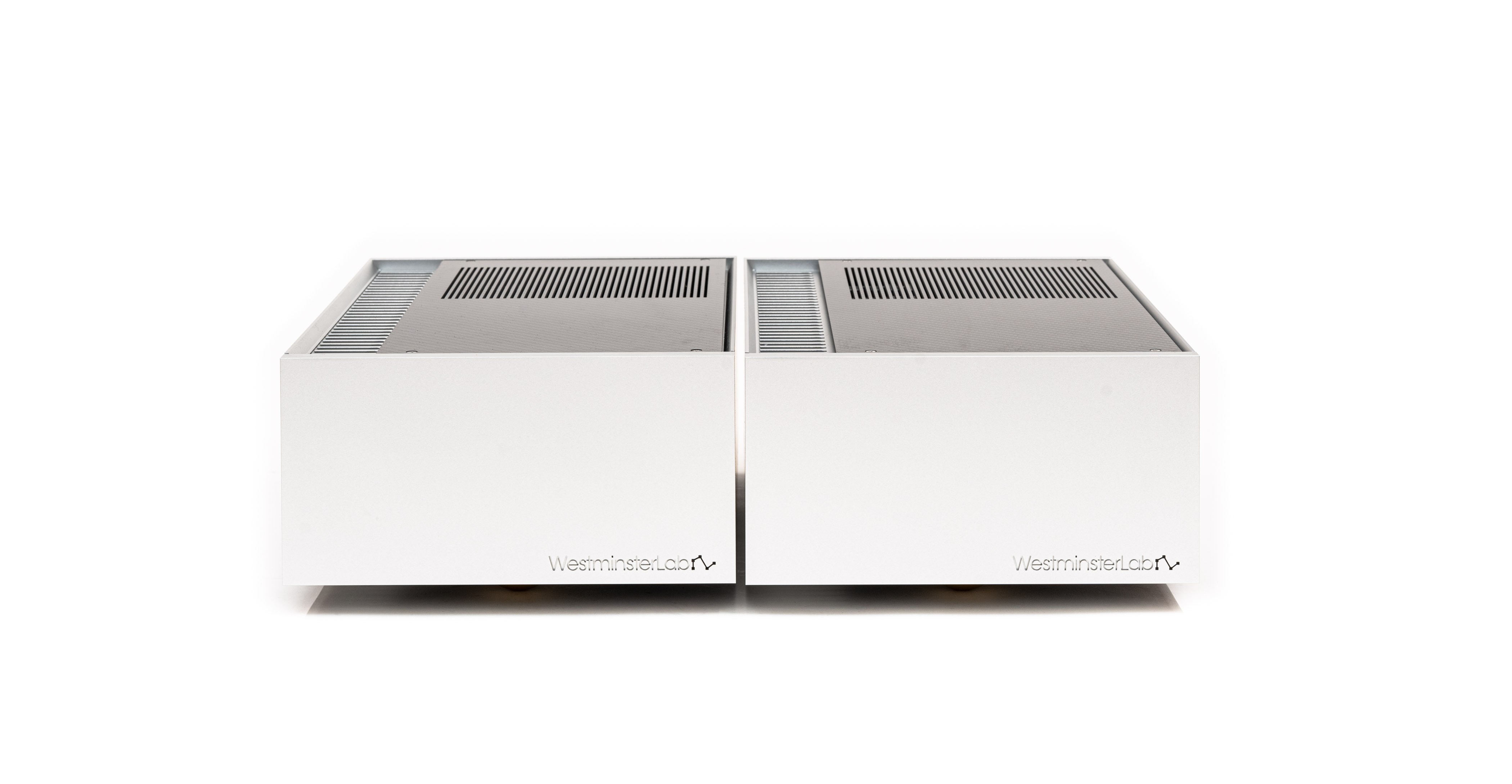
The schematic is designed for audio-band use from the ground up, reducing component count so fewer parts sit between signal and power.
With fewer stages, the PCB layout can route signals perpendicular to power supplies (and keep them as far apart as possible) to minimise interference. The result is stability that holds as the amplifier works hard.
Carbon fibre shielding rejects radio interference without the eddy-current behaviour of copper or aluminium. Non-magnetic 316L stainless fasteners and bracing reduce magnetising and mechanical blur.
Every exterior panel is tuned for damping and low resonance, with resonance frequencies placed as far from the audio band as possible.
Engineered to be Small
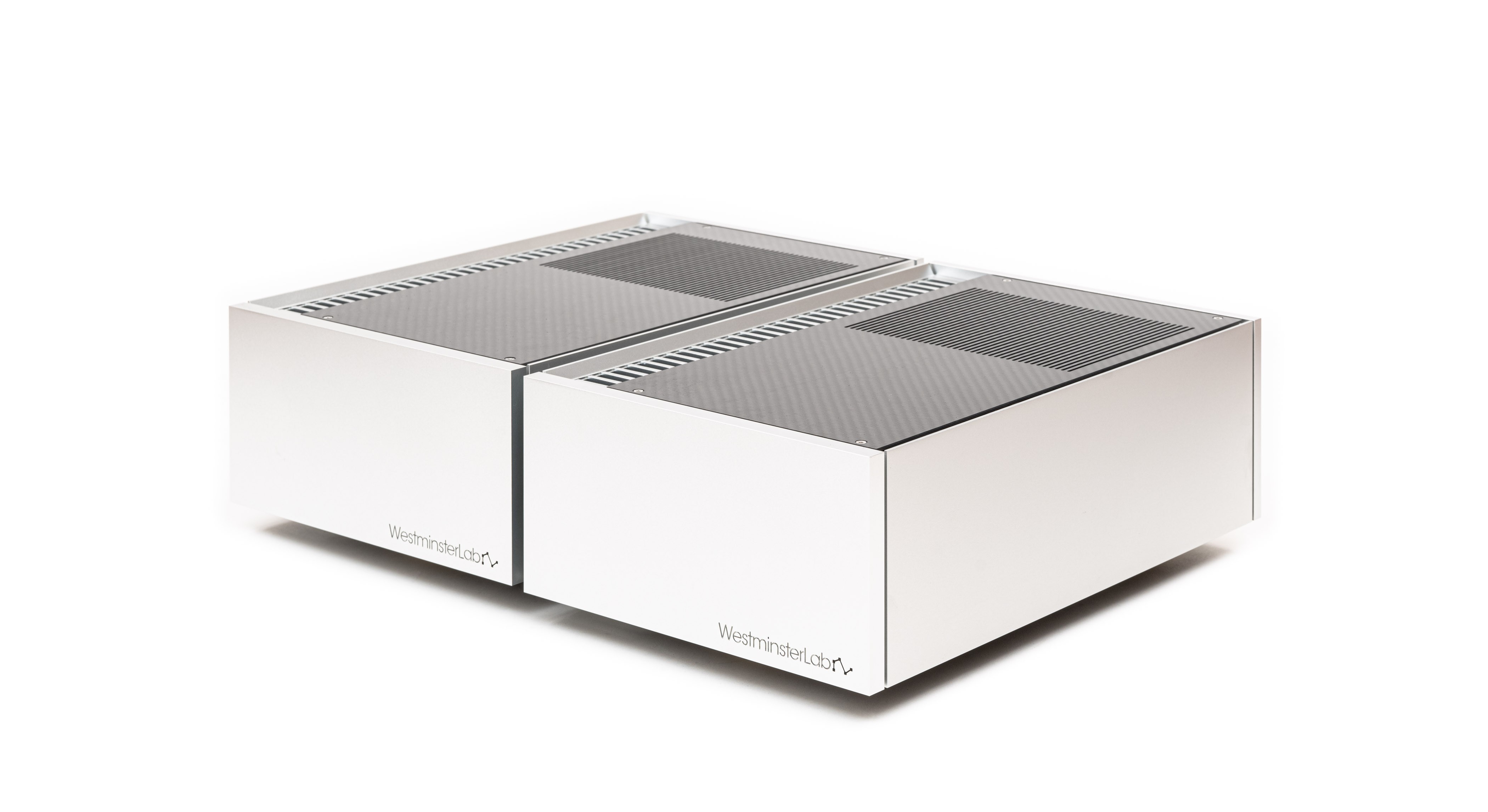
Small chassis. Real Class A.
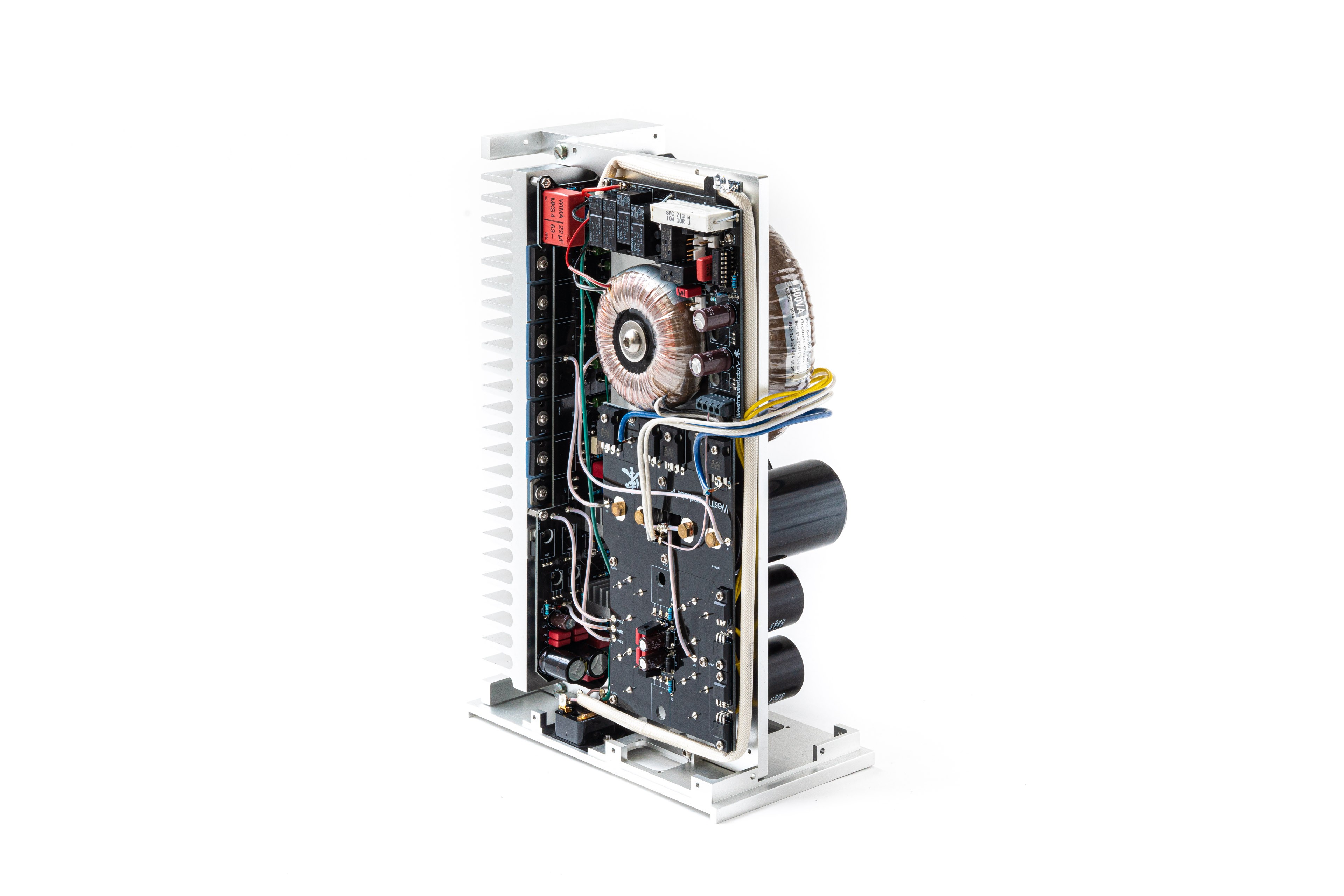
Rei is a pure Class A amplifier designed to generate more than 120 watts of heat from its power transistors — and the heatsink has to dissipate it effectively and efficiently.
Unlike typical approaches, Rei’s heatsink is not left exposed to the listening environment. Speaker-driven vibrations can couple into exposed heatsinks and create micro-distortions, similar in character to the “microphone effect” found in tube systems.
Instead, the heatsink geometry is designed in CAD, then verified with finite simulation. The asymmetric fin profile is engineered so its resonance sits furthest away from critical audio frequency, while thermal dissipation remains uncompromised.
Hundreds of hours of finite simulation, prototyping, and critical listening shaped the final form — so Rei stays compact without treating heat as optional. No shortcuts; the thermal work was done early, with tools that show what shortcuts would cost.
Craft
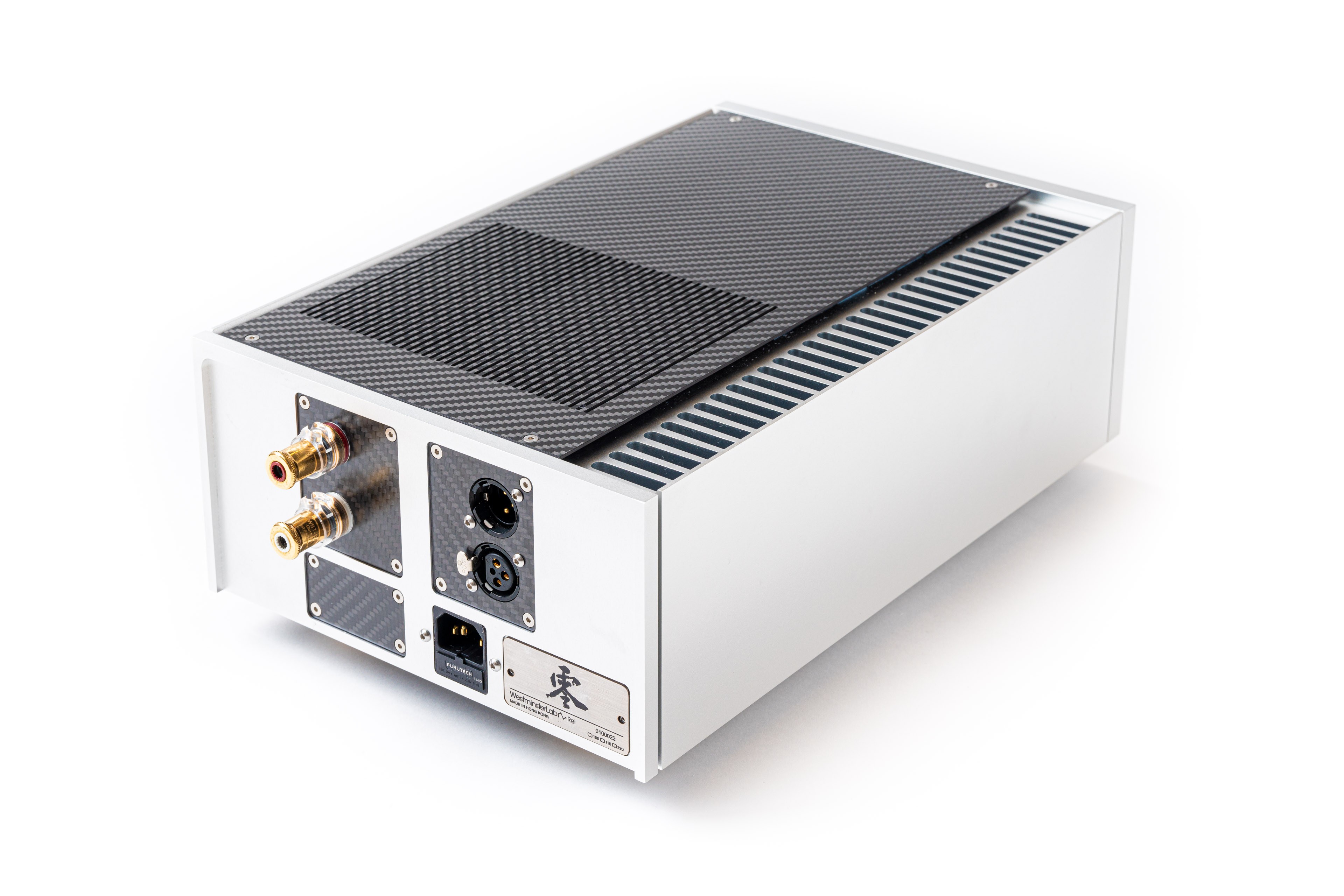
Made by hand in Hong Kong.
Machining
~450 hours
Hand assembly
~120 hours
Components
560
Gallery
Gallery.
Specification
Rei
- Power
- 100 W @ 8 Ω · 200 W @ 4 Ω · 400 W @ 2 Ω
- Power (bridged)
- 400 W @ 8 Ω · 800 W @ 4 Ω
- Frequency response
- 5 Hz–40 kHz ±0.1 dB · 2 Hz–52 kHz −1 dB
- Distortion
- <0.1% @ 1 kHz (100 W @ 8 Ω)
- Signal-to-noise
- 104 dB, A-weighted
- Signal path
- 9 components from input to output
- Input
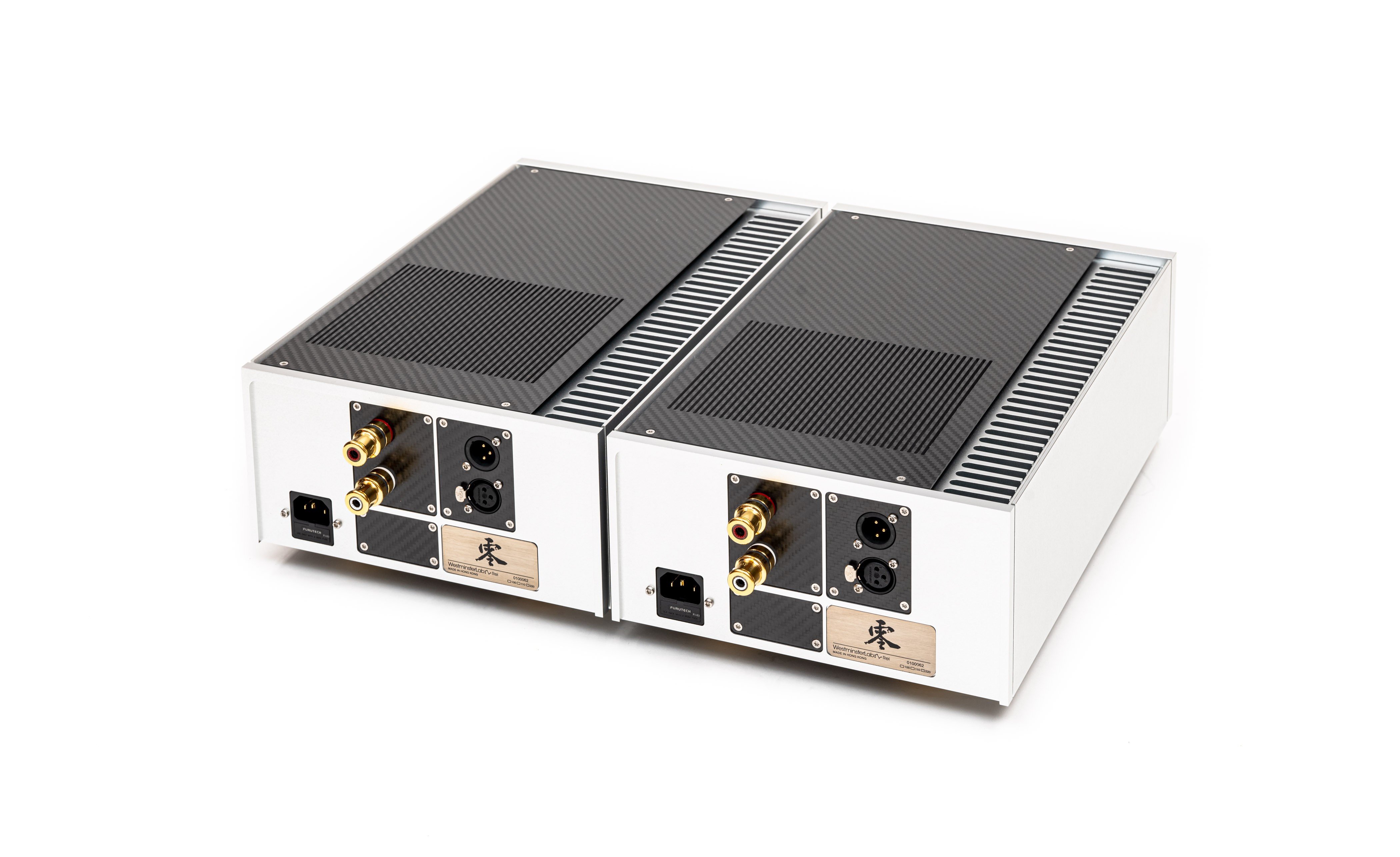
- 1 × balanced XLR
- Output
- 1 × balanced XLR
- Input impedance
- 200 kΩ
- Output impedance
- 0.018 Ω
- Dimensions
- W 232 × H 112 × D 320 mm
- Weight
- 16 kg
- Origin
- Handmade in Hong Kong