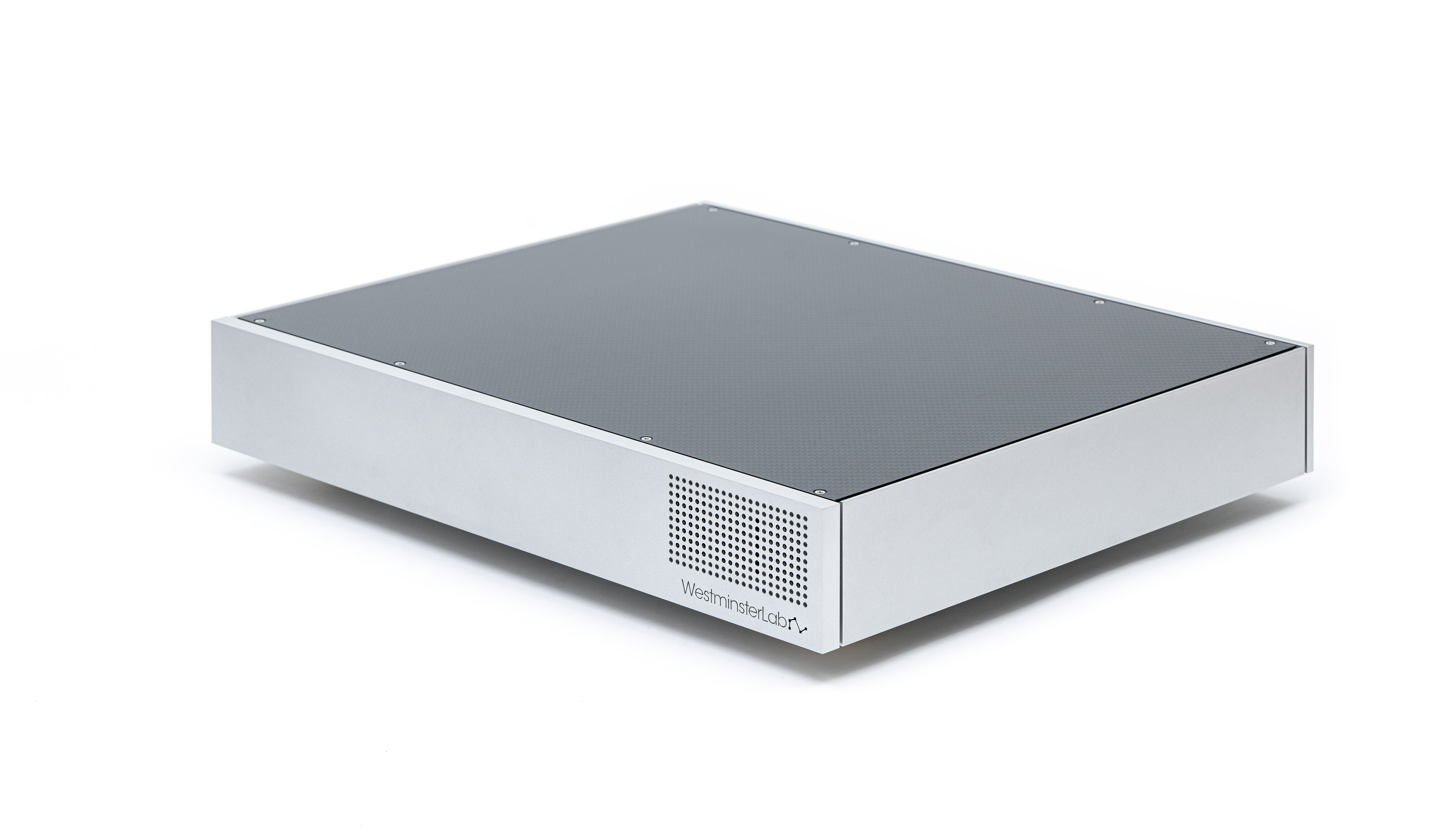
Preamplifier
A preamplifier built for transparency.
Not decoration between source and amplifier — a stage designed to add no distortion, noise, or colour of its own. The signal path has twelve components — beginning to end.
Reinventing the Wheel
What a preamplifier should do.
Quest started from a clear question: is another stage necessary — and if so, what must it contribute? We examined the space between source and amplifier until every section earned its place.
What a preamplifier usually adds — distortion, noise, colour — is exactly what we refuse to add. The aim is straightforward: get more from the recording and the system, without altering the signal.
True Minimalist Approach
Controls that stay out of the way.
No ornamental displays. No meters competing for attention. Quest keeps industrial and electronic design quiet so the listening stays focused. Fewer controls between you and the machine; more of the signal left alone.
Hybrid Grounding lets you choose grounding modes on the fly, matching the preamplifier to the system as a whole — a practical control, available when you need it.
0
Signal Path
Beginningto end.
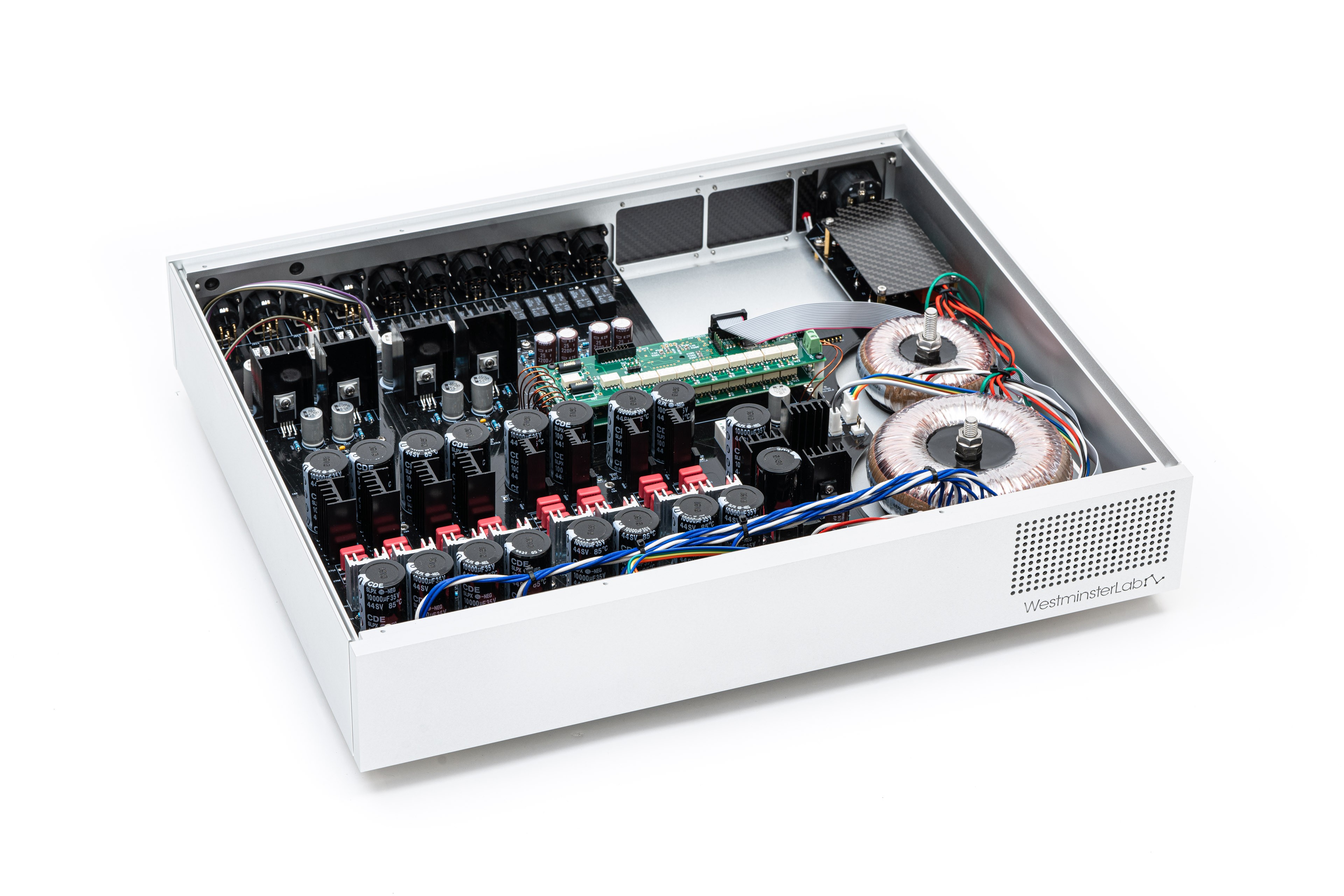
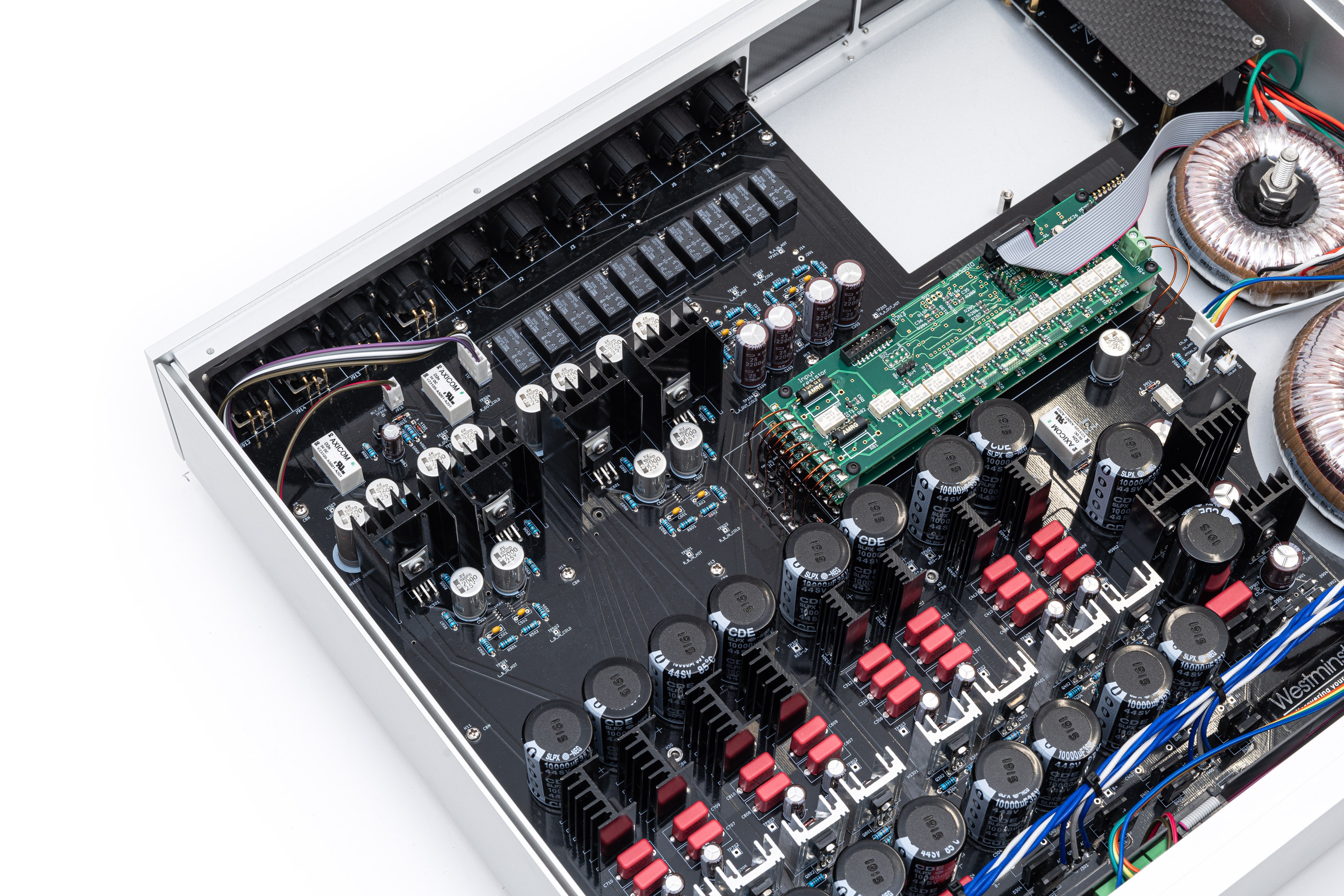
The signal path has twelve components — from the first connector to the last. A short, clean path with less in the way of the recording.
Volume Control
Sixty-four steps. Built in-house.
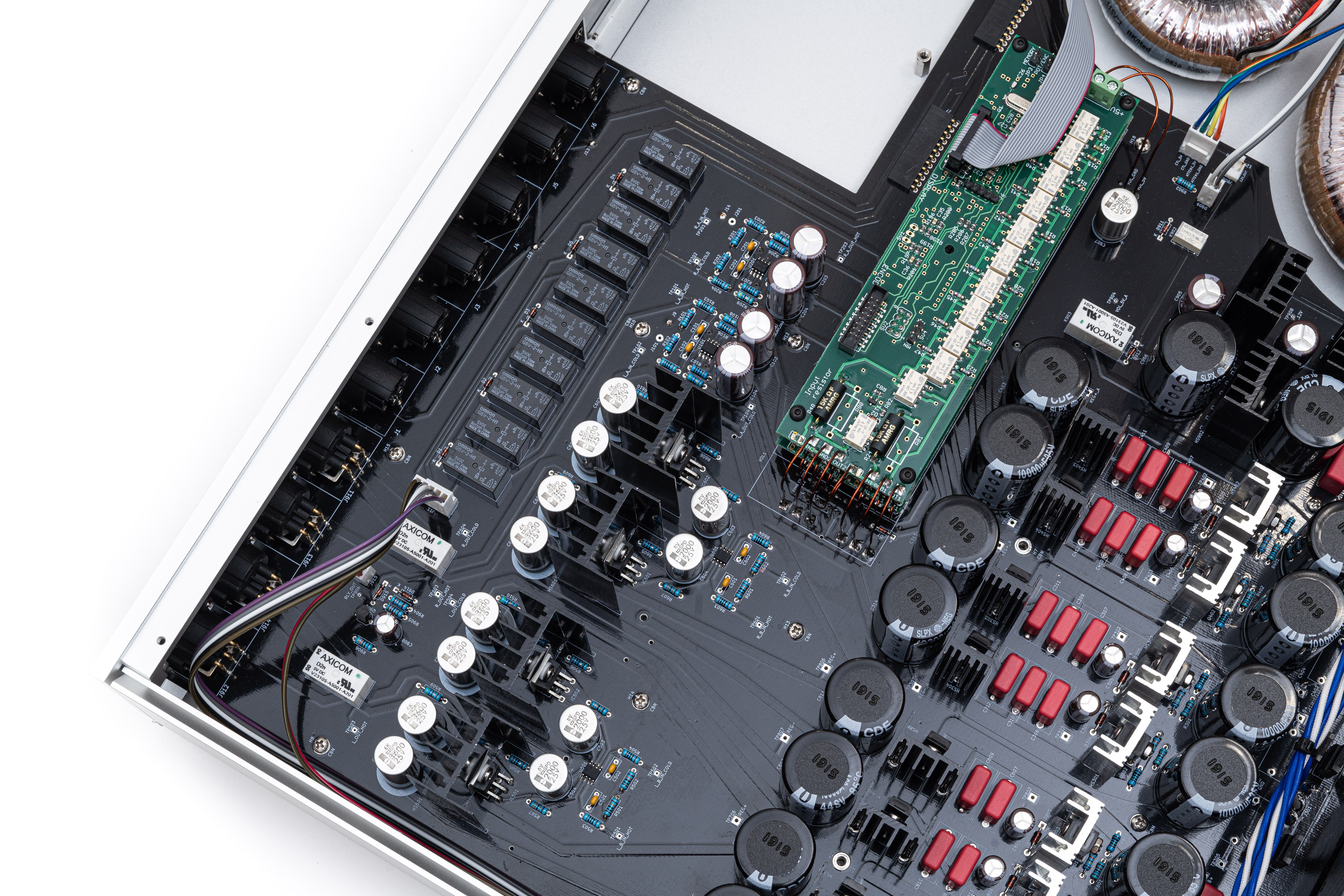
Level is set by a 64-step resistor-to-resistor shunt attenuator — not a pot adapted for audio, but a path built for low noise. Fully balanced. Dual mono. Left and right never share what they do not need to share.
Each step is a precise change in resistance: low noise by design, so level rises and falls without the control stage adding noise or colour. Volume stays a level adjustment, not another active stage in the chain.
Power Supply
Eleven rails. Dual-mono supplies.
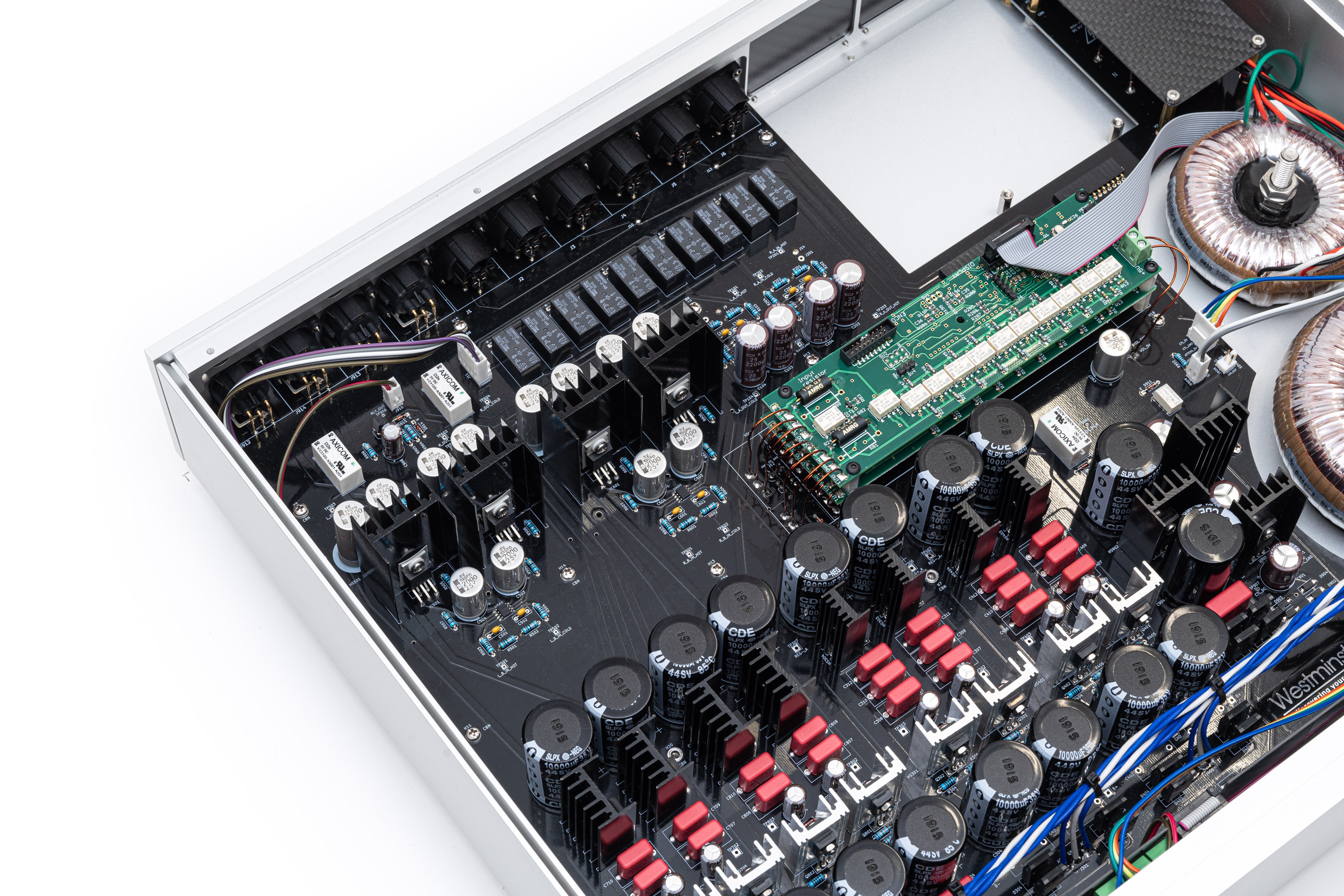
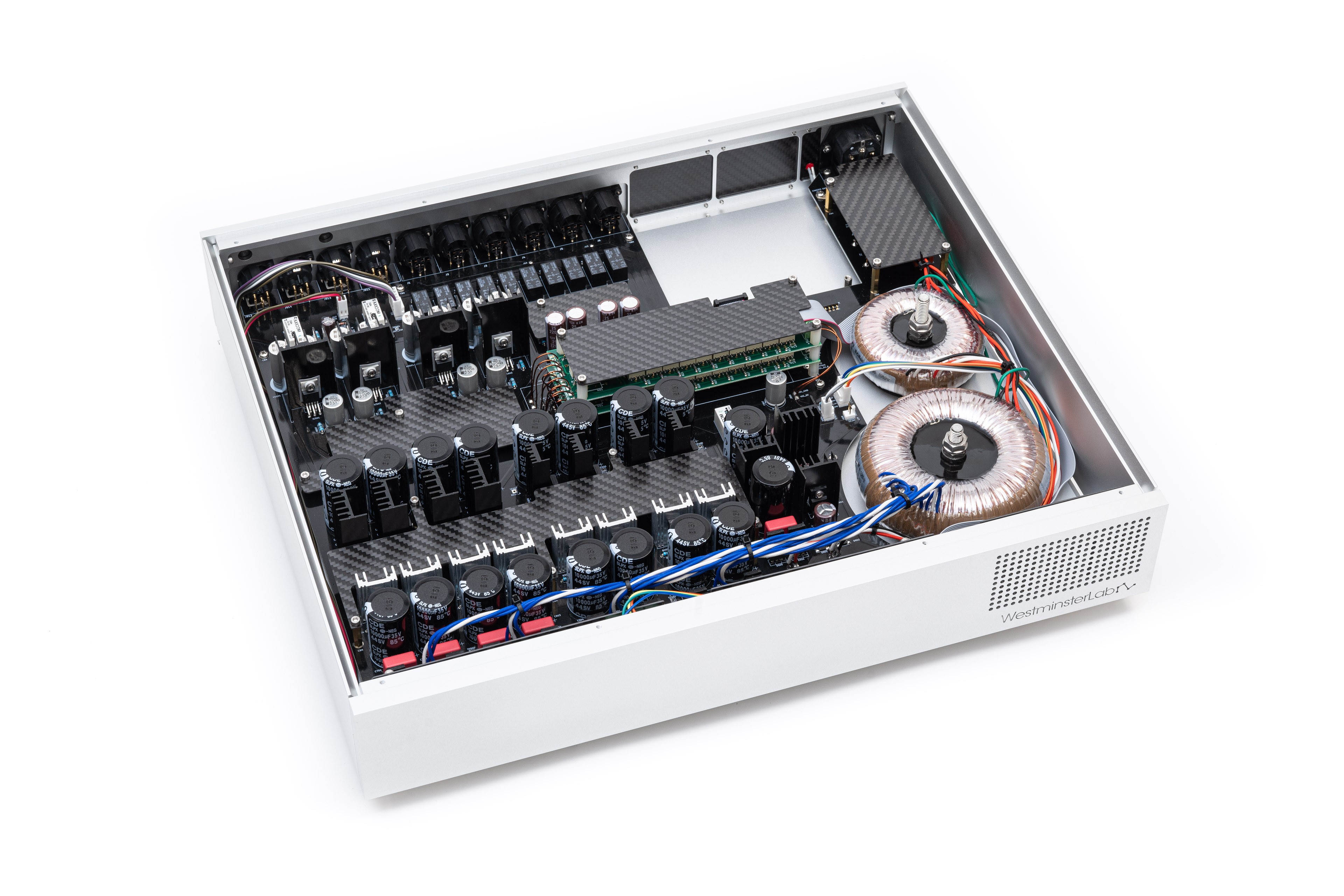
Eleven individual supply rails feed Quest — each one set so digital housekeeping and analogue stages do not draw from each other. Left and right are completely separate: dual-mono thinking carried into the power itself, so channel interaction stays out of the rails.
Ultra-low noise is a design requirement, not a brochure claim. Isolation keeps fragile signals clean from wall to output.
Dual Mono
Isolated sections for clean channels.
Soft-start relays. Isolated sections. Cross-interference held back. Dual-mono layout keeps left and right electrically separate while still working as one stereo system.
For still deeper quiet, an extended carbon-fibre pack adds another layer of shielding within — another measure so low-level signals pass undisturbed.
Flexible & Modular
Two slots. Three modules.
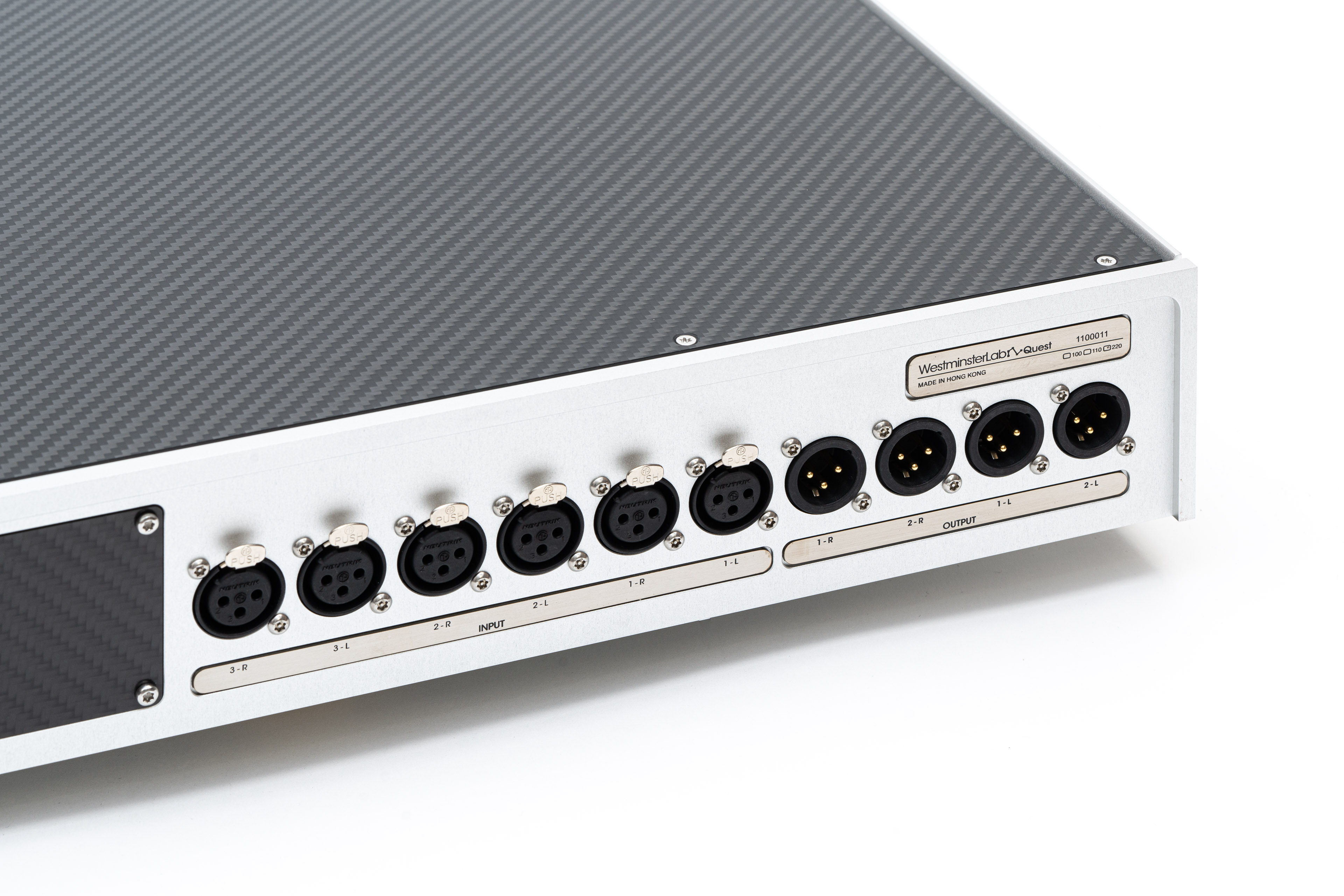
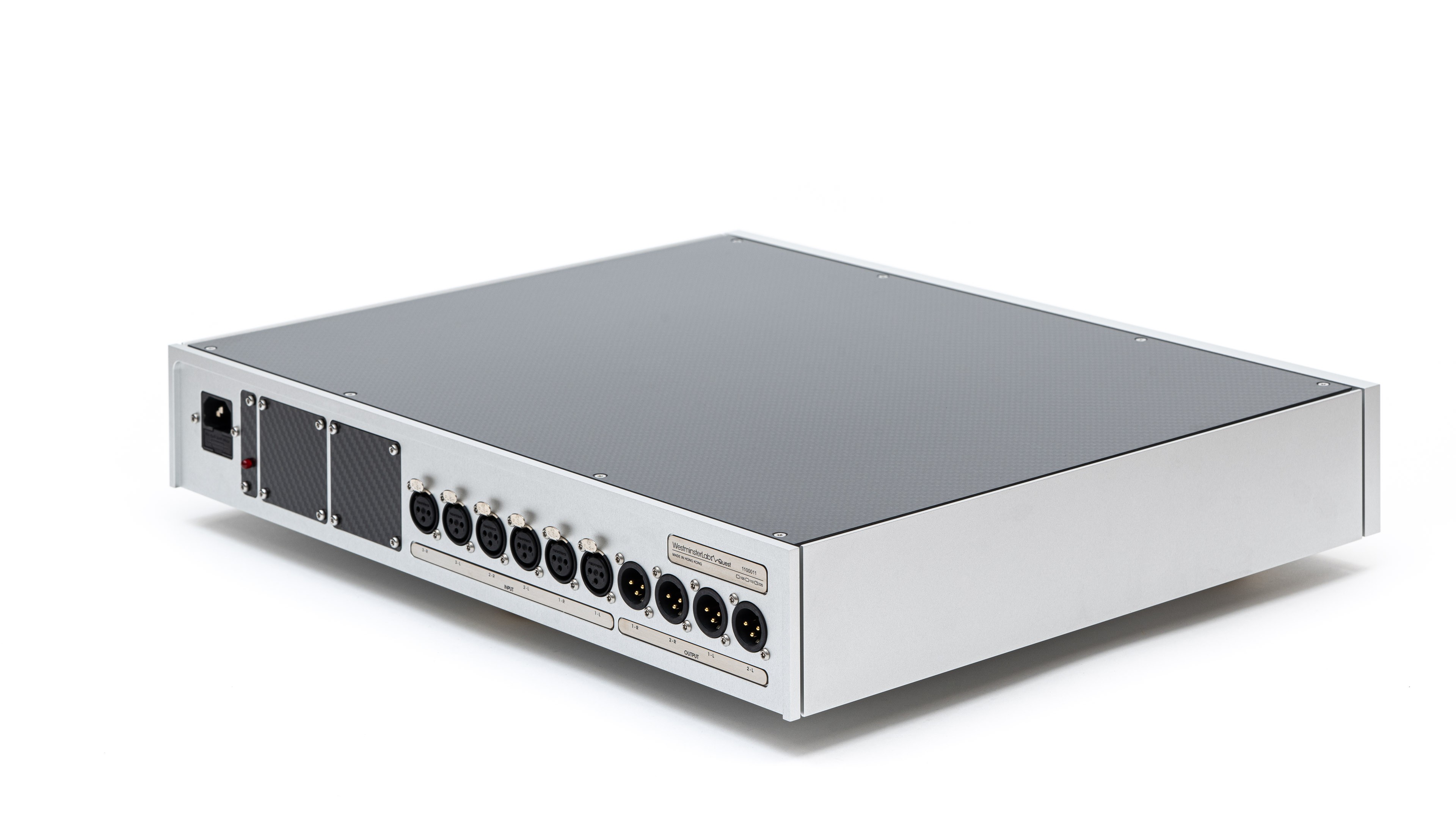
At the rear of Quest sit two expansion slots — add what your system needs without a new chassis. Three modules are ready today; more can follow as needs evolve.
MC/MM Phono
Balanced XLR or RCA input, with impedance, capacitance, and gain steps for modern and vintage MC, MM, and MI cartridges.
DS Audio Equaliser
Unbalanced RCA equaliser for optical cartridges — built for DS Audio, not adapted after the fact.
RCA Input
A clean unbalanced line input for RCA sources, without compromising the rest of the path.
Craft
Made by hand in Hong Kong.
Machining
~160 hours
Hand assembly
~60 hours
Components
360
Gallery
Gallery.
Specification
Quest
- Distortion
- <0.0001% @ 1 kHz
- Signal-to-noise
- >120 dB, unweighted
- Signal path
- 12 components from input to output
- Volume
- 64-step R-R shunt, fully balanced, dual mono
- Power supply
- 11 independent rails, dual-mono L/R
- Inputs
- 3 × balanced XLR + 2 optional modules
- Input impedance
- 51 kΩ
- Input voltage
- 6 Vrms
- Frequency response
- 2 Hz–100 kHz, 0.1 dB
- Outputs
- 2 × balanced XLR
- Output voltage
- 12 Vrms
- Channel separation
- >120 dB
- Gain
- 6.5 dB
- Volume range
- 0 to −63 dB / Mute
- Dimensions
- W 470 × H 110 × D 392 mm
- Weight
- 13.2 kg
- Origin
- Handmade in Hong Kong
MC/MM Phono module
- Input
- Balanced XLR or unbalanced RCA
- Impedance
- 60 Ω–47 kΩ (18 steps)
- Capacitance
- 22–322 pF (5 steps)
- Gain
- 40–70 dB (4 steps)
- Compatibility
- Modern and vintage MC / MM / MI cartridges
- Output
- 19-pin proprietary socket
DS Audio Equaliser module
- Input
- 1 × unbalanced RCA
- Gain
- 27 dB
- Compatibility
- All DS Audio cartridges (DS Audio certified equaliser)
- Output
- 19-pin proprietary socket
RCA Input module
- Input
- 1 × unbalanced RCA
- Input impedance
- 51 kΩ
- Input voltage
- 6 Vrms
- Frequency response
- 2 Hz–100 kHz, 0.1 dB
- Gain
- 6 dB
- Output
- 19-pin proprietary socket