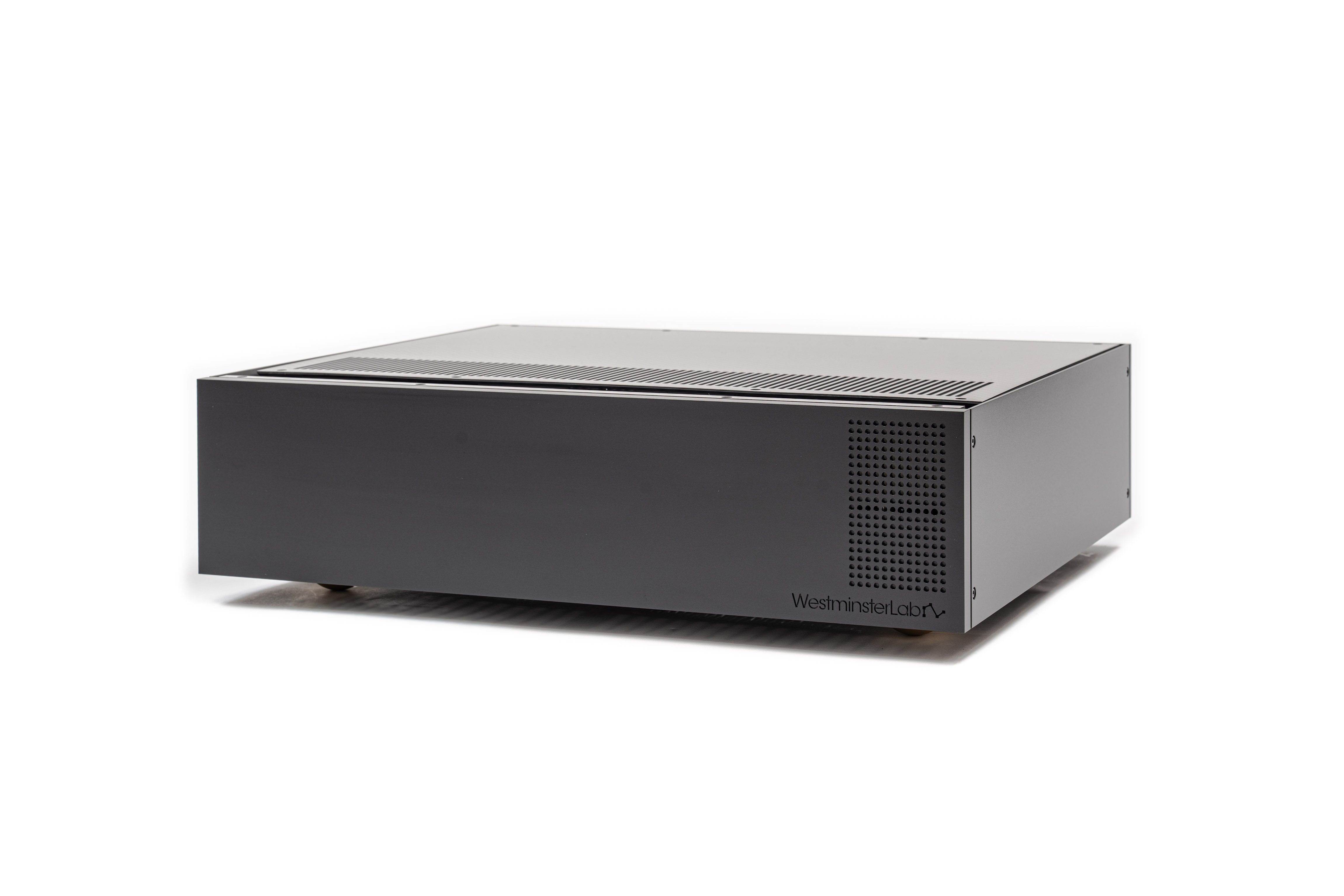
Dual Mono Class A Integrated Amplifier
One chassis. Full Class A system.
A preamplifier and two monoblocks in a chassis under eleven centimetres tall — Class A performance without a rack of separate boxes.
Omne
Reference Class A in a compact form.
High-end audio does not require a large footprint. Omne brings WestminsterLab’s Class A circuitry and fully balanced architecture into a single chassis — the same design language as our separates, packed into a compact integrated.
The challenge was packing: how to fit a preamplifier and two monoblocks into a small chassis without giving up what each would deliver alone. Every millimetre was a trade-off between thermal path, magnetic isolation, and signal integrity — three stages sharing one body without interfering with each other.
The goal was full performance in less space — so one chassis can complete the system.
Pure Class A
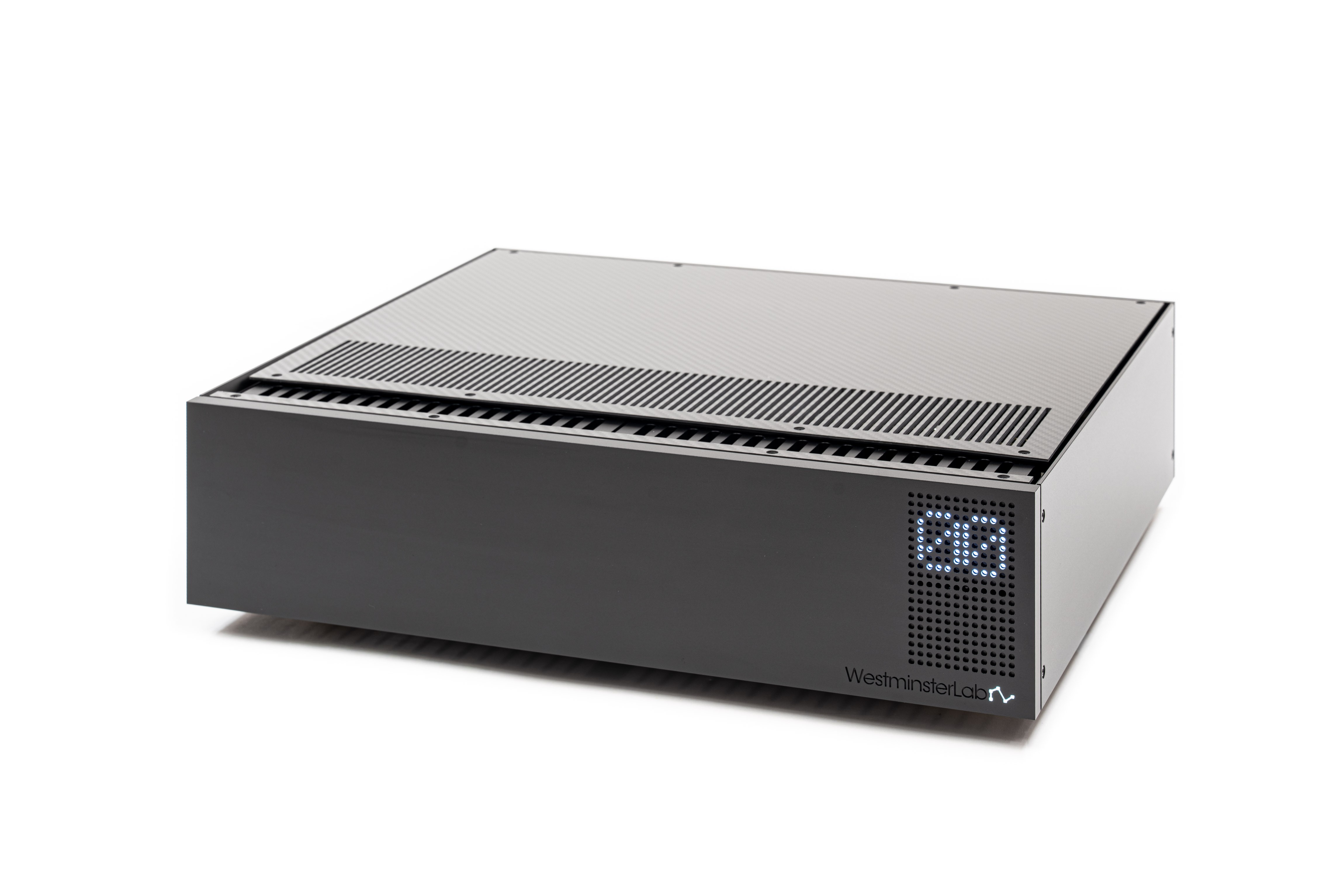
Fifty watts of Pure Class A.
Omne delivers 50 watts per channel into 8 ohms — 100 into 4, 200 into 2 — with a peak current of 12A, from our proven Class A topology. Fully symmetrical. Fully balanced. Controlled current delivery, not forced dynamics.
Transistors are matched within 1% across multiple working points, then stress-tested under load for hours, so output stays consistent and stable. Class A built for real listening rooms, not just the bench.
The topology favours linearity from input to loudspeaker.
Engineering
Thermal design built for Pure Class A.
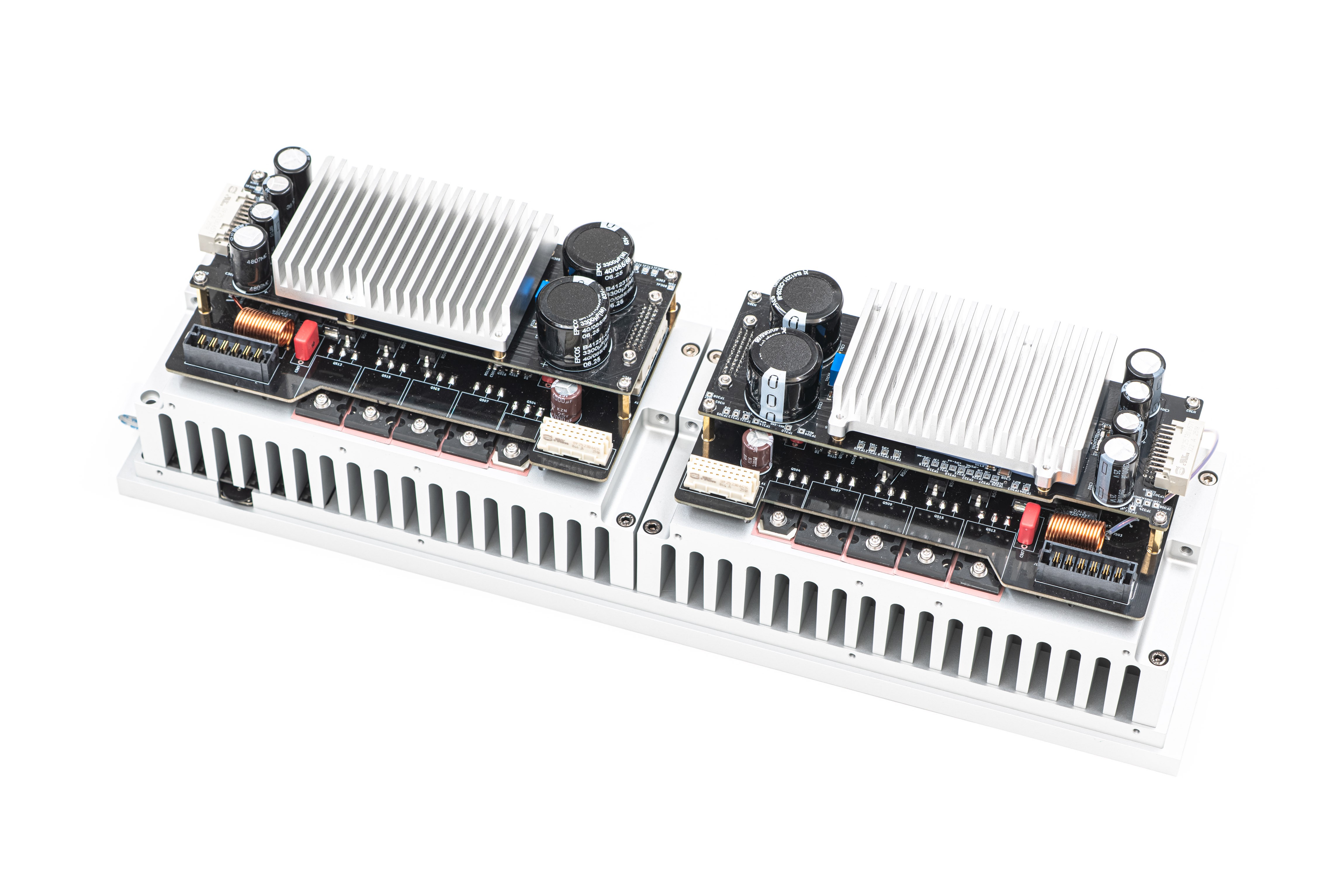
Pure Class A runs hot by nature. Each heatsink is machined from a single billet of high-grade aluminium — thermal paths shaped by simulation, then verified in use, so the chassis can manage heat without instability.
In a form this compact, heat is part of the architecture. Fins, mass, and path are arranged so energy leaves cleanly while the signal passes through — stable operation without excess bulk or noise.
Thermal stability is the baseline for undisturbed playback.
In-house Audio Controller
Quest’s audio controller, built in.
Inherited from the Quest preamplifier: a gain of just 6 dB, a short signal path, and the same architecture that keeps music close to its source. Little is added; the path stays protected.
Modules power up only when selected — on demand, quiet when unused. The interface stays out of the way so the chassis does not dominate the room.
Versatile & Effortless
One chassis. Several roles.
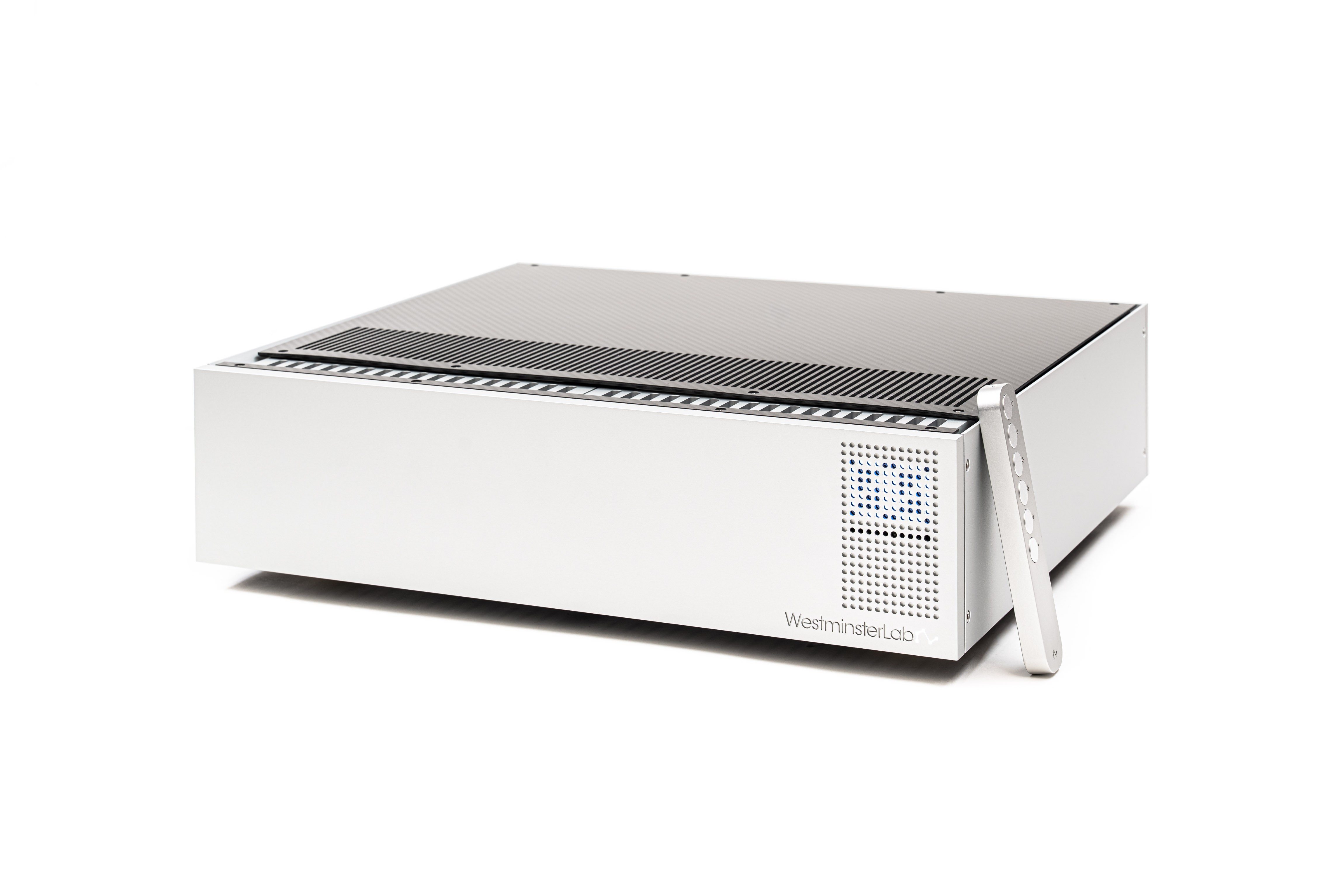
Omne is built for daily use, not display. The same chassis can run as a full integrated amplifier, or switch to preamp-only mode so the power stage rests while the signal still passes with WestminsterLab purity.
When more current is needed, a pair of Rei can join externally for horizontal bi-amping: Omne stays the centre of the system, and the monoblocks supply the extra drive your loudspeakers need. Home-theatre bypass on a chosen input lets cinema and two-channel share a room — film or music on the same system.
Day to day, the large display and remote keep control simple: only six buttons between you and the recording. Complexity stays inside the metal; the interface stays clear.
Preamp only
Run Omne as a preamplifier alone — power stages off, signal path intact.
Horizontal bi-amping
Add external Rei monoblocks when the room or loudspeakers need more current.
Home-theatre bypass
A chosen input passes through for cinema, then returns the system to two-channel listening.
Display & remote
A large, readable display and a remote with only six buttons — clear control without clutter.
Bespoke Volume Control
Volume control designed in-house.
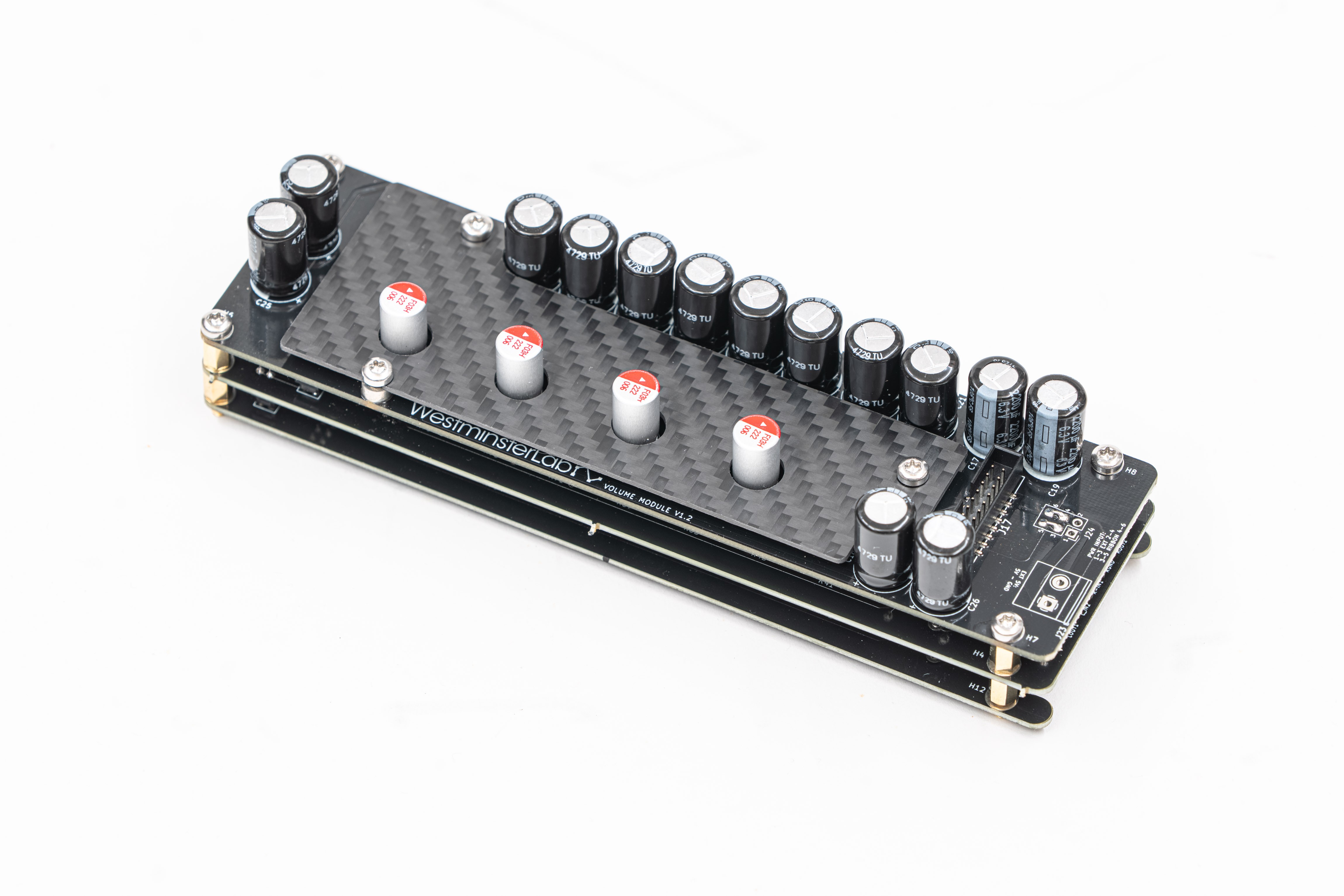
Volume is where many systems introduce noise or inconsistency. Omne’s control was developed from the ground up by WestminsterLab — not a borrowed attenuator, but a path built for how level should change in a listening room.
At its heart sits a very low-powered microcontroller, chosen and tuned for audio use: enough precision for accurate steps, low enough draw to stay clear of the signal. The display refreshes with deliberate jitter so energy never concentrates into a single noise source. When the display sleeps, cores follow — light and logic shut down together.
Ninety-nine steps from full to mute. Each one a precise change in level, then out of the way so the music continues.
Flexible & Modular
Two slots. Three modules.
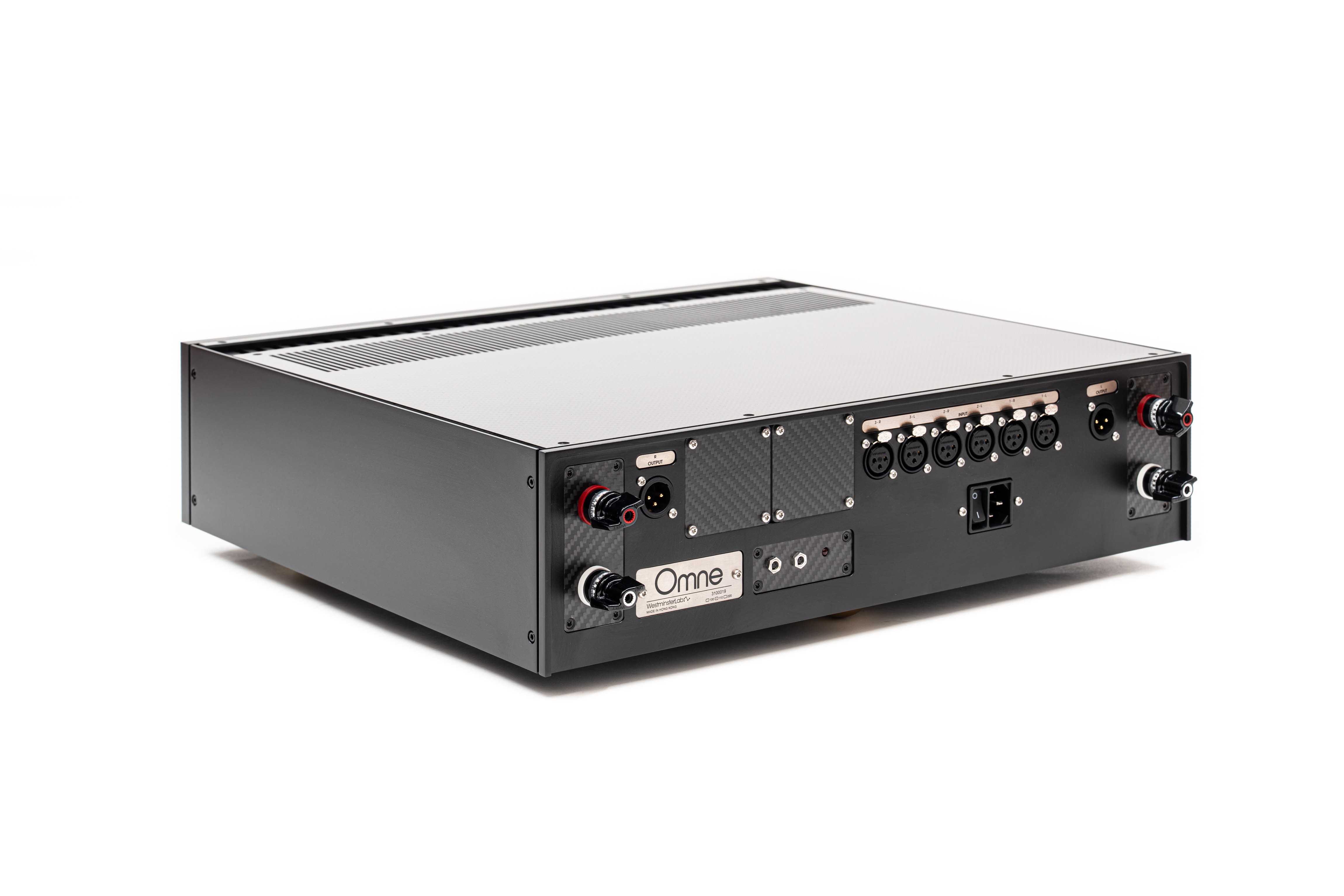
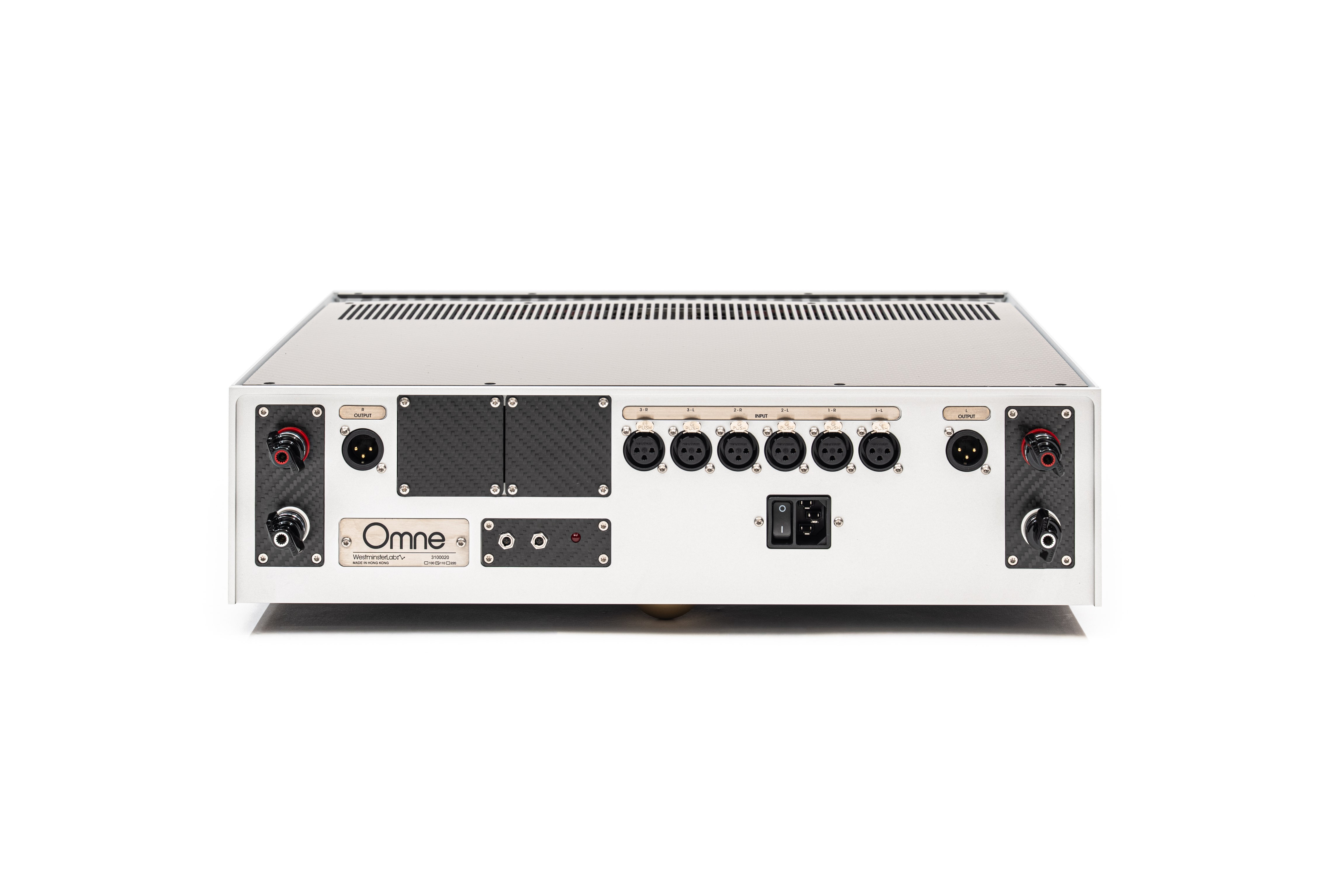
At the rear of Omne sit the same two expansion slots as Quest — add what your system needs without a second chassis, and without turning the integrated into something else. Three modules are ready today; more can follow as needs evolve.
Fitted modules wake only when you select them, so unused paths stay quiet: phono when the vinyl turns, equaliser when the optical cartridge is in use, RCA when a source prefers unbalanced. The chassis stays one; the system can still grow.
MC/MM Phono
Balanced XLR or RCA input, with impedance, capacitance, and gain steps for modern and vintage MC, MM, and MI cartridges.
DS Audio Equaliser
Unbalanced RCA equaliser for optical cartridges — built for DS Audio, not adapted after the fact.
RCA Input
A clean unbalanced line input for RCA sources, without compromising the rest of the path.
Power Architecture
Four O-cores. Eighteen rails. Clear separation.
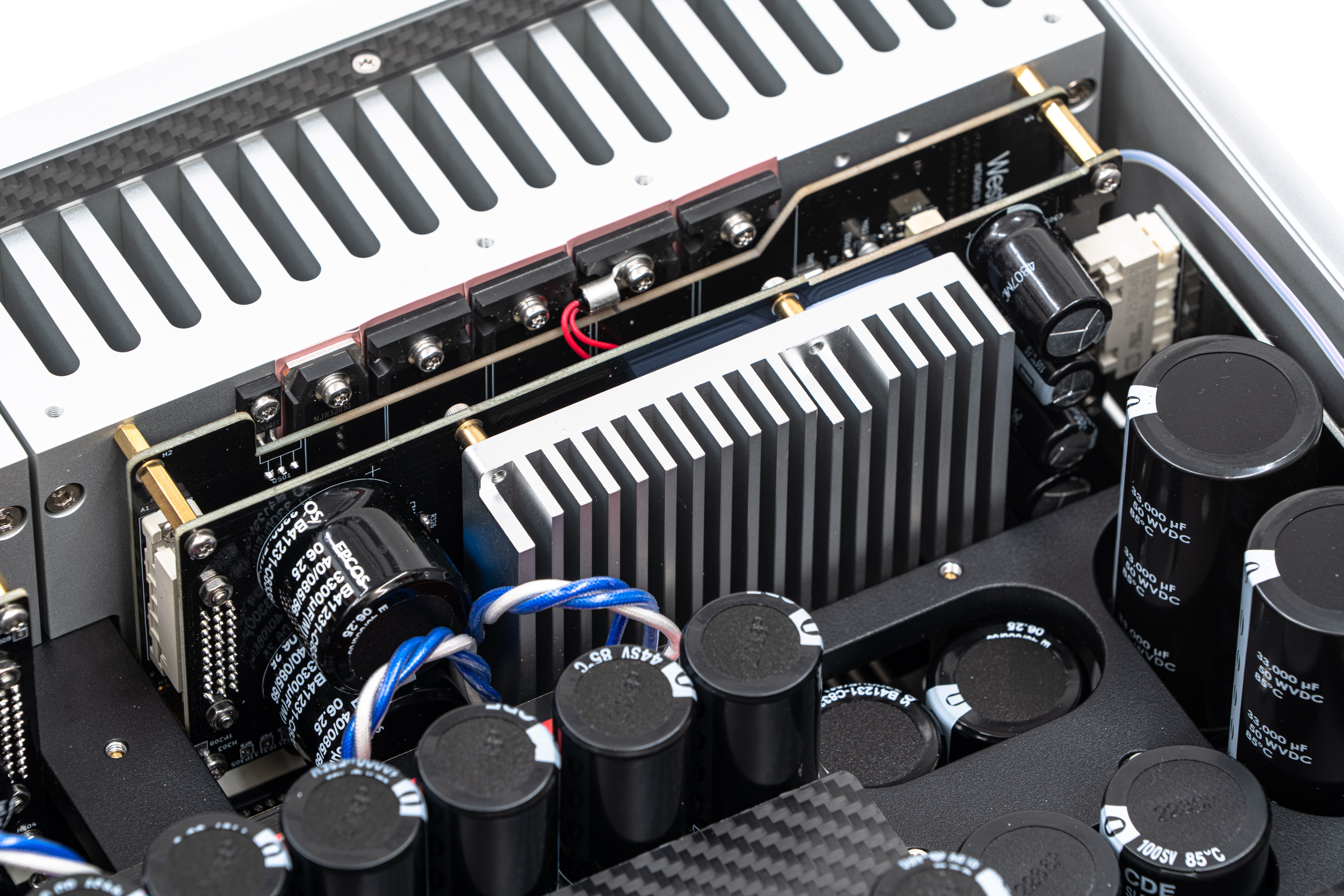
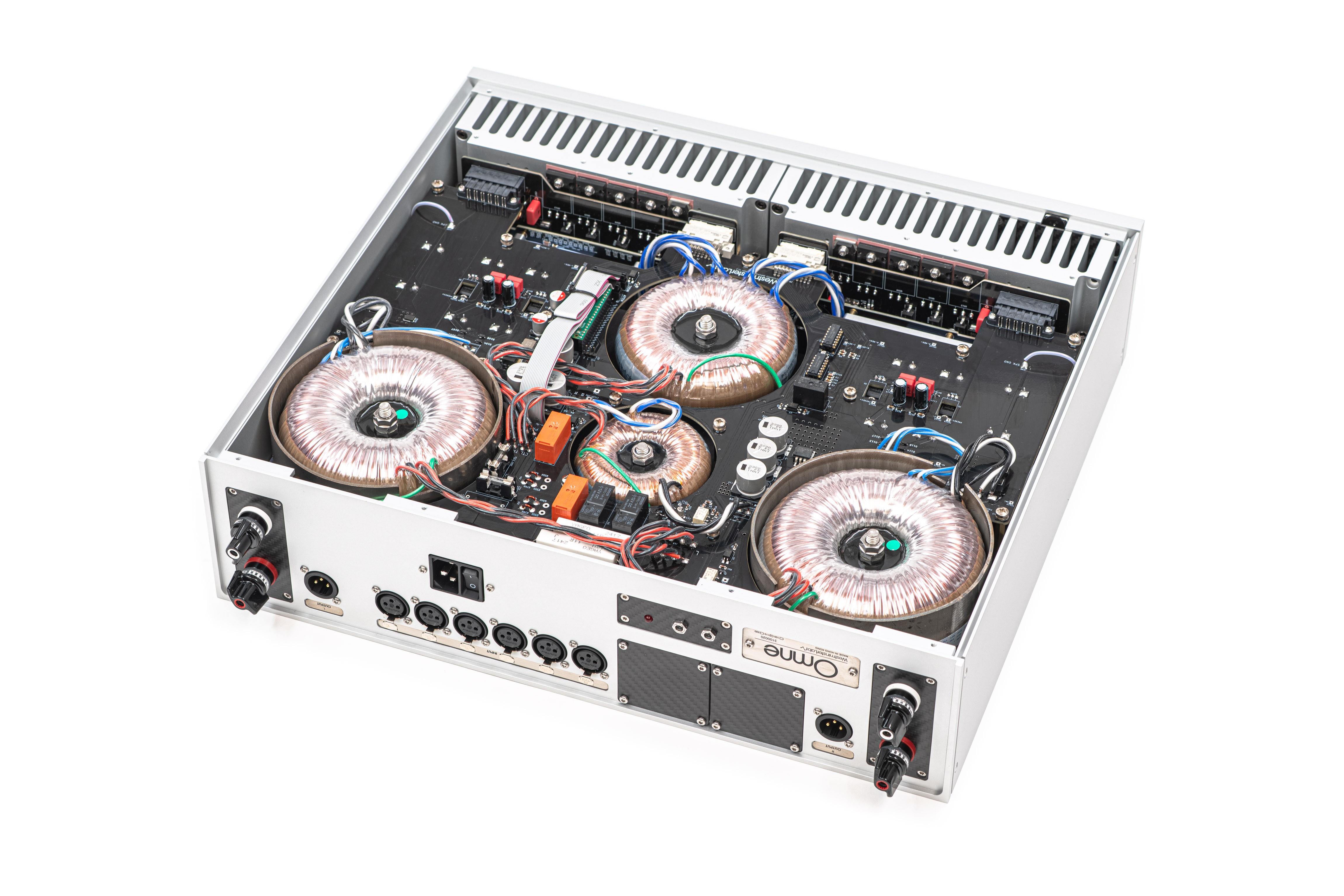
The supply is built to keep the signal path clean. Beneath Omne’s exterior: four O-core transformers and eighteen independent linear supplies — even the microprocessor and display on their own rail, so digital housekeeping never draws from the analogue stages.
Isolation is how three stages share one chassis without interference. Preamplifier and power amplifier sections remain electrically distinct, so Omne can serve as a preamplifier alone without losing purity — one design, with quiet separation inside the metal.
Craft
Made by hand in Hong Kong.
Machining
~320 hours
Hand assembly
~50 hours
Components
920
Gallery
Gallery.
Specification
Omne
- Inputs
- 3 × balanced XLR + 2 optional modules
- Input impedance
- 51 kΩ
- Input voltage
- 6 Vrms
- Pre-out
- 1 × balanced XLR, 12 Vrms, 6 dB gain
- Pre-out frequency response
- 2 Hz–100 kHz, ±0.1 dB
- Total system gain
- 32.5 dB
- Volume
- 99 steps, 0 to −63 dB / Mute
- Topology
- Pure Class A
- Power
- 50 W @ 8 Ω · 100 W @ 4 Ω · 200 W @ 2 Ω
- Frequency response
- 5 Hz–40 kHz ±0.1 dB · 2 Hz–52 kHz −1 dB
- Damping factor
- >300 (5 Hz–20 kHz)
- Output impedance
- 0.030 Ω
- Dimensions
- W 470 × H 140 × D 447 mm
- Weight
- 35 kg
- Origin
- Handmade in Hong Kong
MC/MM Phono module
- Input
- Balanced XLR or unbalanced RCA
- Impedance
- 60 Ω–47 kΩ (18 steps)
- Capacitance
- 22–322 pF (5 steps)
- Gain
- 40–70 dB (4 steps)
- Compatibility
- Modern and vintage MC / MM / MI cartridges
- Output
- 19-pin proprietary socket
DS Audio Equaliser module
- Input
- 1 × unbalanced RCA
- Gain
- 27 dB
- Compatibility
- All DS Audio cartridges (DS Audio certified equaliser)
- Output
- 19-pin proprietary socket
RCA Input module
- Input
- 1 × unbalanced RCA
- Input impedance
- 51 kΩ
- Input voltage
- 6 Vrms
- Frequency response
- 2 Hz–100 kHz, 0.1 dB
- Gain
- 6 dB
- Output
- 19-pin proprietary socket